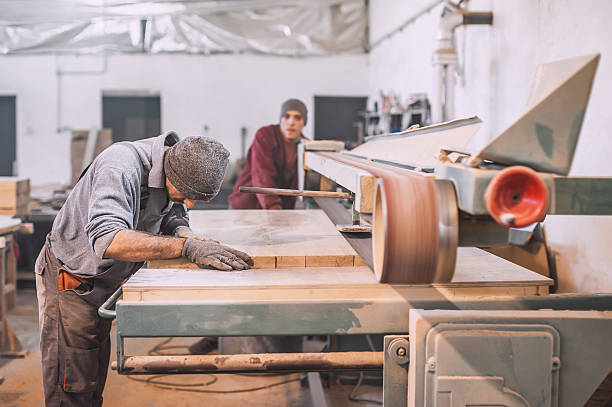
Woodworking is both an art and a craft that requires precision, skill, and the right tools. Whether you’re a beginner eager to start creating furniture or a professional looking to enhance your workshop, choosing the right woodworking machine can significantly improve your efficiency and the quality of your work. In this article, we will explore the top 5 woodworking machines that cater to both beginners and professionals, helping you make informed decisions for your workshop.
Understanding the Importance of Woodworking Machines
Woodworking machines are essential for shaping, cutting, joining, and finishing wood pieces. While hand tools have their charm and precision, machines provide consistency, speed, and the ability to handle more complex tasks. Investing in the right woodworking machine can save time, reduce errors, and allow you to tackle more ambitious projects. For beginners, these machines provide a solid foundation to learn essential techniques, while professionals benefit from increased productivity and advanced capabilities.
Table Saw: The Heart of Any Workshop
A table saw is arguably the most versatile and indispensable woodworking machine for any workshop. It consists of a circular saw blade mounted on an arbor, powered by an electric motor, and set into a flat table. Table saws allow precise straight cuts, making them ideal for ripping, crosscutting, and bevel cuts.
Beginners will find a table saw invaluable for learning basic cutting techniques, while professionals rely on its accuracy and speed for large-scale projects. Modern table saws come with safety features like riving knives and blade guards, making them safer for new users. Choosing the right table saw involves considering blade size, motor power, and fence system stability.
Band Saw: Perfect for Curves and Thickness
Another essential woodworking machine is the band saw, which features a long, continuous blade that runs on two wheels. Unlike a table saw, a band saw excels in cutting curves and irregular shapes. It is also excellent for resawing lumber into thinner pieces, which is particularly useful when working with hardwoods.
For beginners, a band saw provides a chance to experiment with curved designs and create intricate projects without the frustration of hand-cutting. Professionals often use band saws for precise resawing and complex joinery, making it a staple in most workshops. Modern band saws come in various sizes, with adjustable speed settings to accommodate different wood types and thicknesses.
Planer: Ensuring Smooth, Even Surfaces
A planer, also known as a thickness planer, is a woodworking machine designed to create uniform thickness across wooden boards. It removes material from the surface to achieve a smooth, even finish, which is crucial for professional-quality furniture and cabinetry.
Beginners benefit from a planer because it simplifies the process of preparing raw wood, eliminating the need for extensive hand sanding or manual planing. Professionals rely on planers to maintain consistency across multiple boards, saving time and ensuring high-quality results. When choosing a planer, consider factors such as cutting width, motor power, and ease of adjustment to match your workshop needs.
Drill Press: Precision Drilling Made Easy
While handheld drills are convenient, a drill press offers unparalleled accuracy and stability. This woodworking machine consists of a motor-driven drill mounted on a column with adjustable height and angle, allowing precise vertical drilling. Drill presses are perfect for creating uniform holes for dowels, screws, or hardware installations.
Beginners can use a drill press to achieve consistent results without struggling with hand control. Professionals benefit from the machine’s ability to handle repetitive drilling tasks efficiently, especially when working on complex projects that require exact alignment. When selecting a drill press, consider the chuck size, speed settings, and table adjustments for optimal performance.
Joiner: Perfecting Edges and Joints
A joiner, also known as a jointer, is a woodworking machine used to flatten and straighten the edges of wooden boards. This process is crucial for creating seamless joints, ensuring that boards fit together perfectly in furniture or cabinetry projects.
For beginners, a joiner simplifies the process of edge preparation, reducing the risk of uneven or wobbly joints. Professionals rely on joiners for precision work, particularly in fine woodworking and custom furniture creation. Modern joiners come with adjustable fence angles, depth settings, and dust collection features to enhance safety and efficiency.
Choosing the Right Woodworking Machine
Selecting the best woodworking machine depends on your skill level, project requirements, and available space. Beginners should focus on machines that are versatile, safe, and easy to operate, while professionals may prioritize machines with higher power, precision, and additional features.
Consider the following factors when making your decision:
- Safety Features: Look for blade guards, emergency stop buttons, and dust collection systems.
- Durability: Invest in machines made from high-quality materials that can withstand heavy use.
- Ease of Use: Machines with intuitive controls and adjustable settings help beginners learn faster.
- Maintenance: Choose machines that are easy to maintain and repair to ensure longevity.
- Budget: Balance your budget with the machine’s capabilities to get the best value for your investment.
Maximizing Efficiency in Your Workshop
Once you have chosen your woodworking machines, organizing your workshop is crucial for efficiency. Keep frequently used machines within easy reach, ensure proper lighting, and maintain a clean workspace to prevent accidents. Regular maintenance, including cleaning and lubrication, will extend the lifespan of your machines and ensure consistent performance.
In addition, learning how to use each woodworking machine effectively is essential. Beginners can benefit from online tutorials, workshops, or mentorship from experienced woodworkers. Professionals should stay updated on new techniques, safety standards, and machine innovations to maintain a competitive edge.
Conclusion
Investing in the right woodworking machine can transform your woodworking experience, whether you are just starting out or are a seasoned professional. Table saws, band saws, planers, drill presses, and joiners form the backbone of any well-equipped workshop, providing versatility, precision, and efficiency. By understanding the capabilities of each woodworking machine and selecting the right ones for your needs, you can create high-quality projects with confidence and skill.
Choosing the right machines is not just about convenience; it’s about unlocking your full potential as a woodworker. With the right tools in hand, both beginners and professionals can bring their creative visions to life, turning raw wood into beautiful, functional masterpieces.